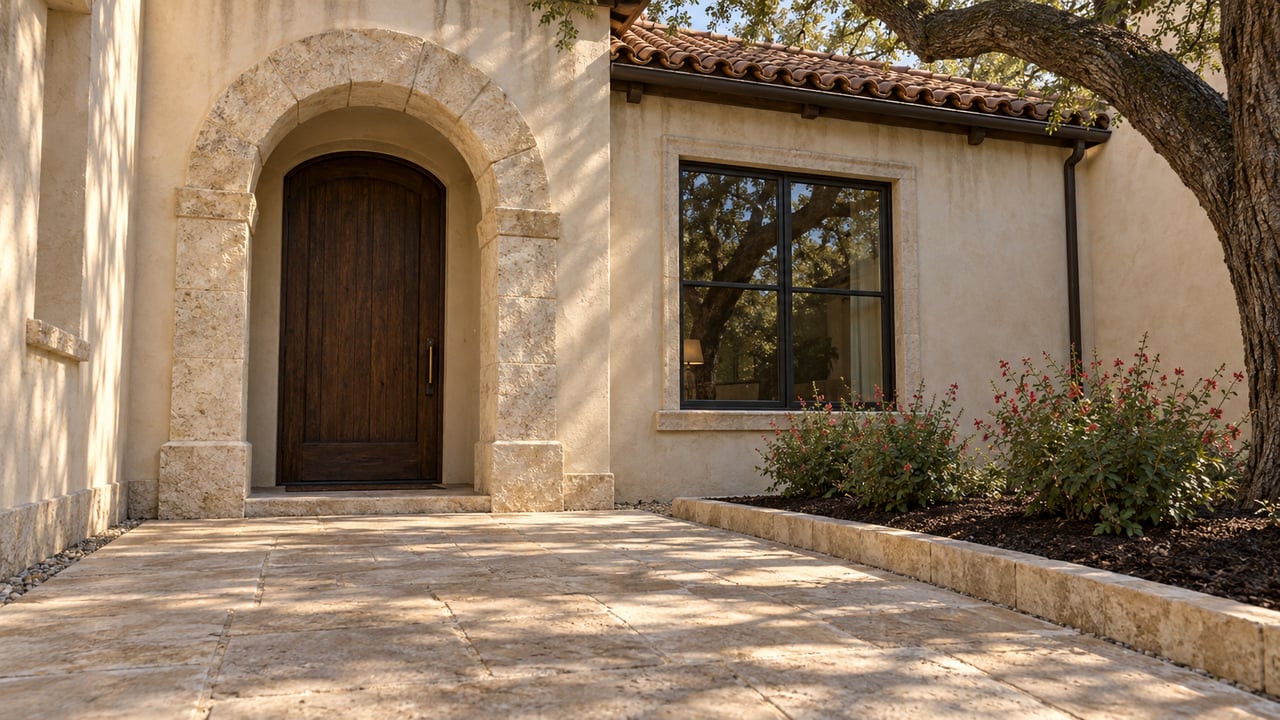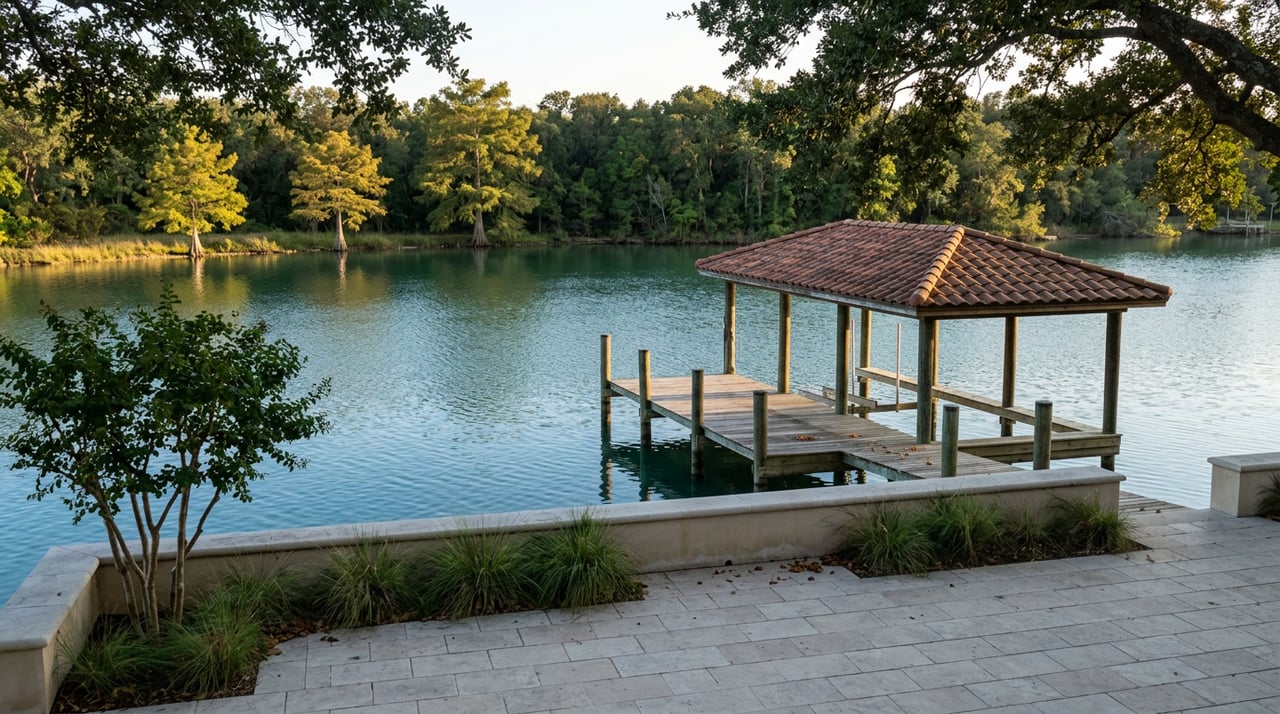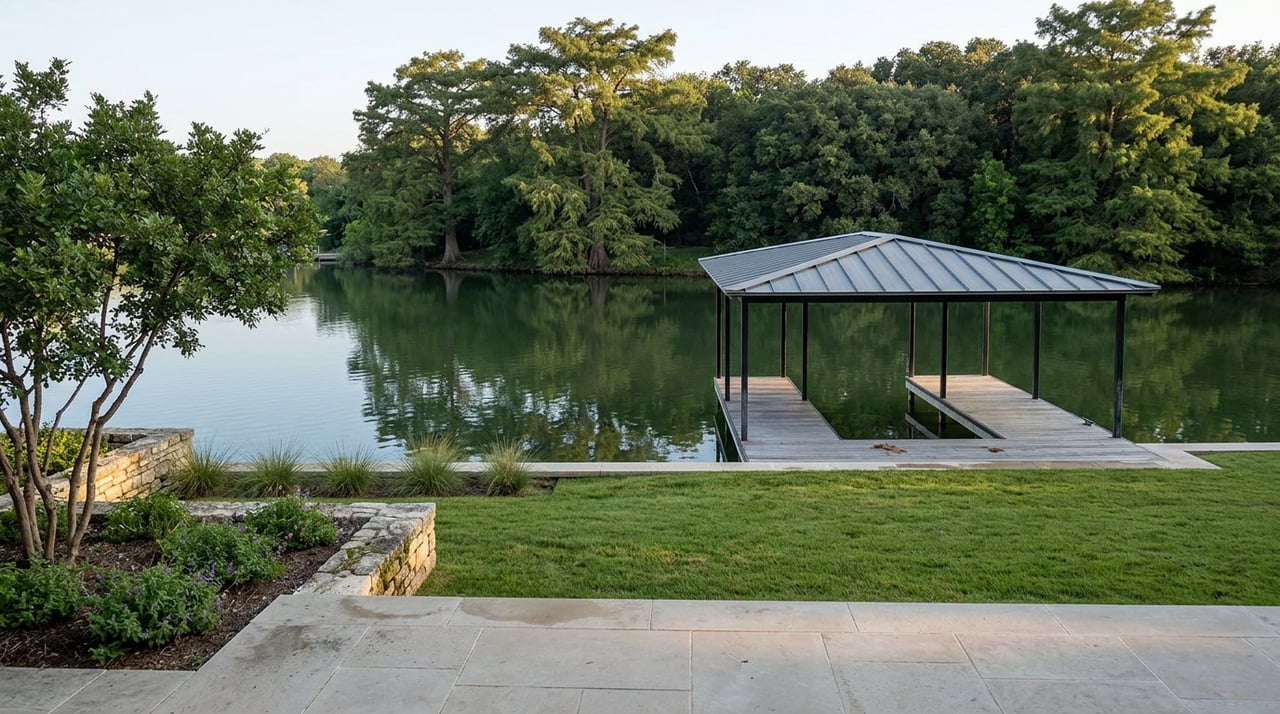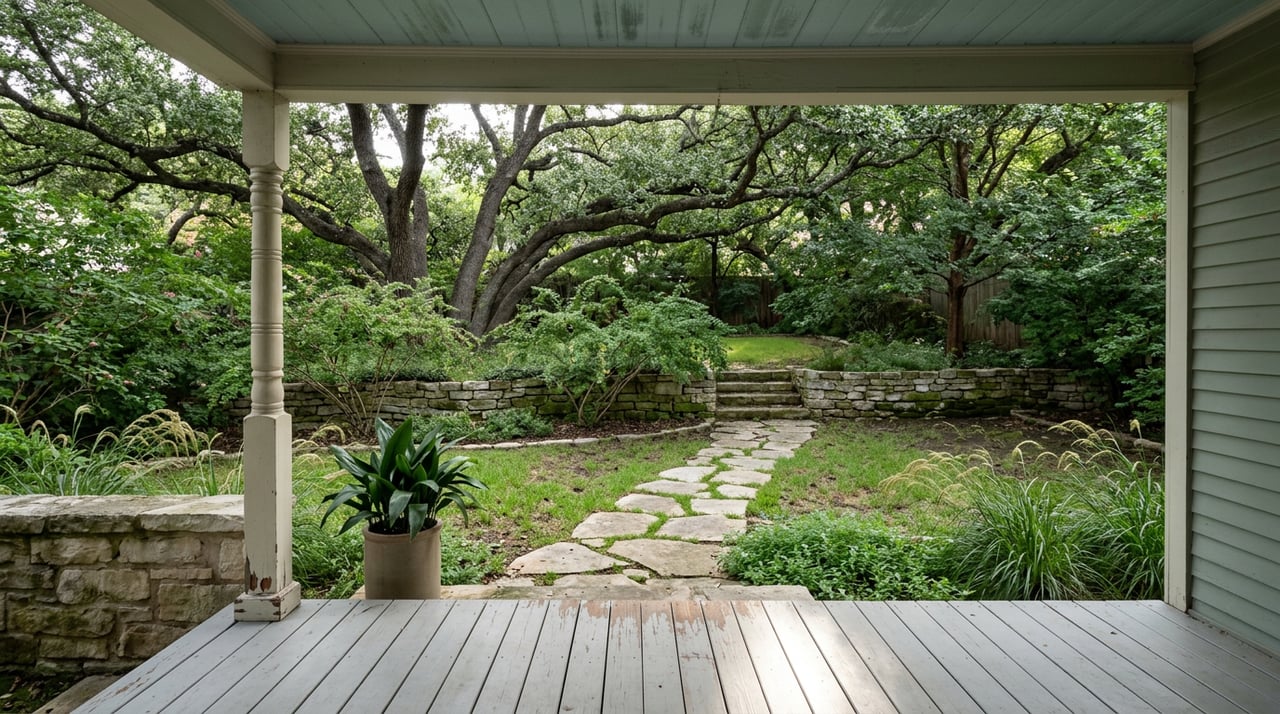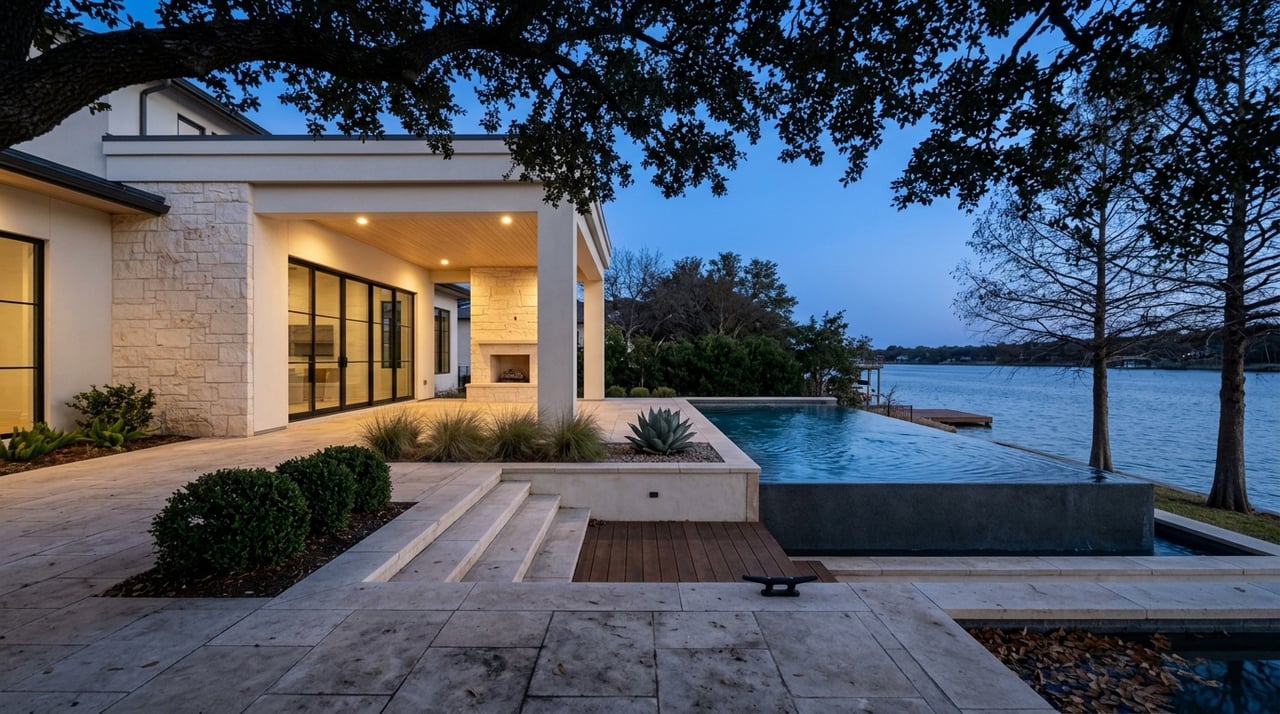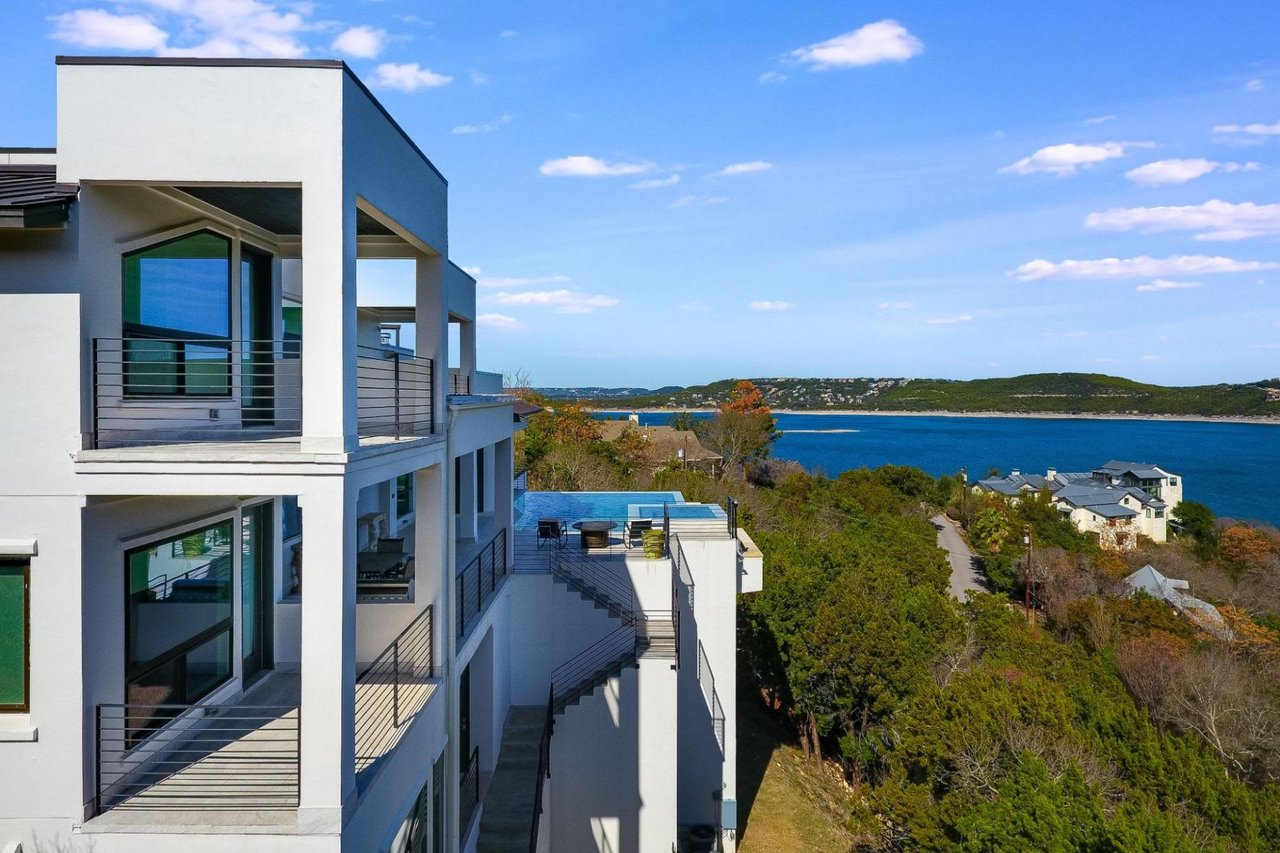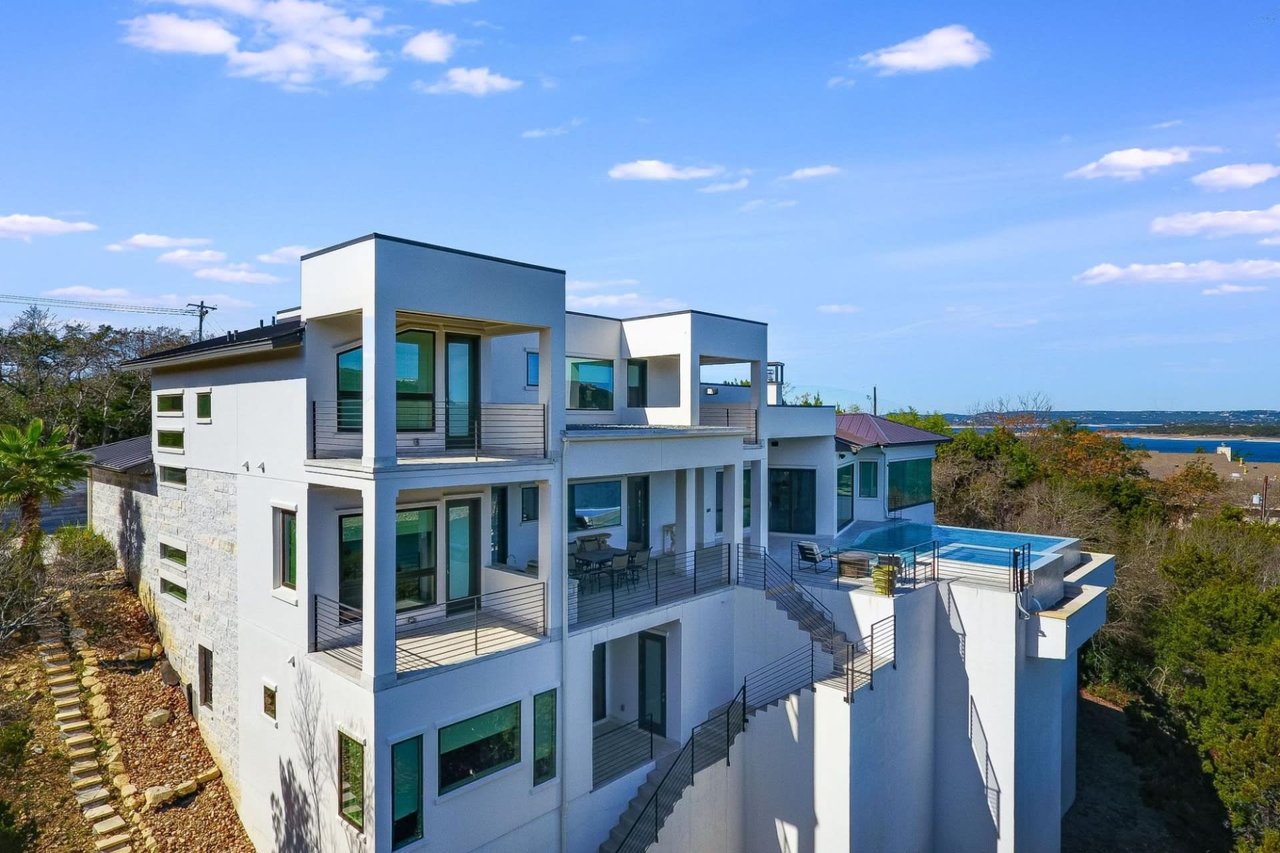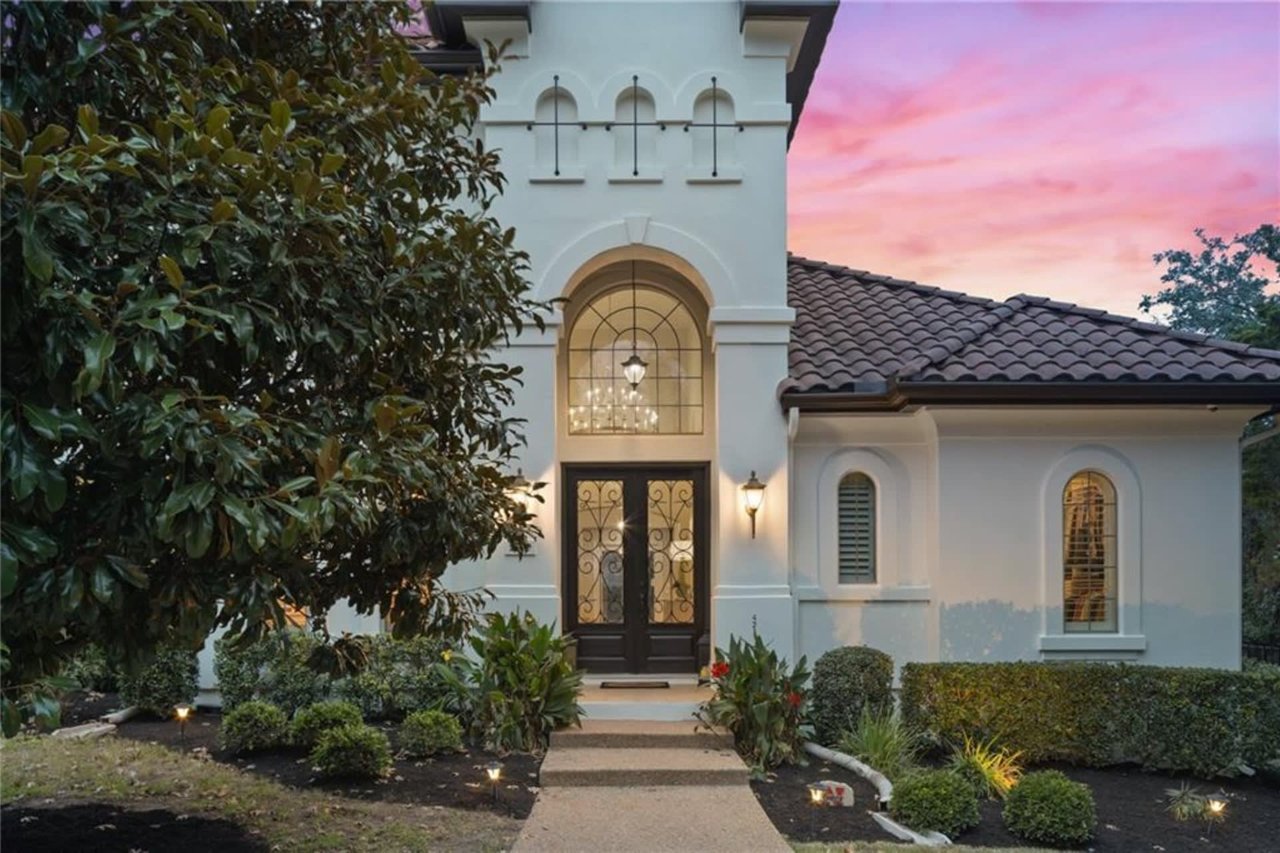

Starting October 12, the Lower Colorado River Authority will begin lowering Lake Austin by roughly a foot a day, dropping the lake about 10 feet from its normal range of 491.8 to 492.8 feet above mean sea level down to a target between 481.8 and 482.8 feet. It is the first time this has happened since 2017. Boat ramps will close. Swimming will be suspended at Emma Long Metropolitan Park. And along 22 miles of shoreline, homeowners will look out at exposed lakebed and see an obvious opportunity: fix the dock, repair the bulkhead, dredge the boat slip while the water is out of the way.
That instinct is correct. The timing assumption underneath it is not.
Most people who buy or sell waterfront property in this part of Texas learn the same shorthand: LCRA handles the lake, so LCRA handles the dock. That is true on Lake Travis, Lake Buchanan, Inks Lake, Lake LBJ, and Lake Marble Falls. It is not true on Lake Austin. The authority that decides whether your dock repair is legal this fall is the City of Austin, and the difference between knowing that and assuming otherwise is the difference between a clean file at closing and a permit problem that follows the property for years.
Two lakes, two regulators, one word that gets buyers into trouble
LCRA built and manages the Highland Lakes chain, and its own materials are direct about where its authority on Lake Austin ends. The agency states plainly that the City of Austin is responsible for management of Lake Austin dock and safety regulations, and directs dock questions on this specific lake to city staff rather than its own Water Surface Management office.
The split looks like this in practice:
| Lake | Who regulates dock construction | How that shows up |
|---|---|---|
| Travis, Buchanan, Inks, LBJ, Marble Falls | LCRA | Governed by the Highland Lakes Marina Ordinance and the Safety Standards for Residential Docks; docks of 1,500 square feet or less need no LCRA permit at all |
| Lake Austin, Lady Bird Lake, Lake Walter E. Long | City of Austin | Governed by Land Development Code Article 13, which requires a site plan and building permit before anyone modifies a shoreline or builds a dock, bulkhead, or shoreline access structure |
LCRA does not disappear from the Lake Austin picture entirely. It still holds recorded shoreline easements on many parcels, it still schedules the lake-lowering itself, and it is still the agency you check with to confirm you actually own the submerged land under your proposed dock rather than a neighbor or the agency itself. But the construction permit, the document that determines whether a dock can legally exist in its current footprint, comes from Austin Development Services, not from LCRA's Water Surface Management team. A buyer who asks a seller "is the dock LCRA permitted?" is asking the wrong question on this particular lake, and a seller who answers it confidently based on Highland Lakes habit may be giving an honest answer that has nothing to do with whether the dock is actually compliant.
Why a scheduled drawdown raises the stakes rather than lowering them
The city has not conducted a Lake Austin drawdown since 2017, and only one has happened since 2011. In the early 2000s these events were closer to routine. The current gap exists partly because LCRA changed its winter operating policy after Winter Storm Uri in 2021, choosing to keep hydroelectric generation capacity available during cold months rather than lowering lakes in winter. Drawdowns now happen in fall instead, and this one arrives after a year of public debate over invasive hydrilla, with landowners pushing for lower water to interrupt the plant and anglers noting that the same vegetation has been producing strong fish habitat.
A 10-foot drop on Lake Austin moves roughly 13,000 acre-feet of water. When LCRA refills the lake starting November 24, that water comes from Lake Travis, which will fall by about nine inches to make up the difference. The refill is expected to bring Lake Austin back to normal range by November 30, closing a window of roughly six weeks from first lowering to full refill.
That six-week window is exactly when the permitting question stops being theoretical. Austin Development Services is building a dedicated Site Plan Exemption application specifically for minor dock and bulkhead repairs during this drawdown, meant to make small fixes faster to approve while the lakebed is accessible. The city is holding a public open house on September 9 from 6 to 8 p.m. at the Permitting and Development Center on Wilhelmina Delco Drive to walk residents through exactly what that exemption covers and what still requires a full site plan review. Anyone with a closing scheduled between now and December, on either side of the transaction, has a direct reason to know what gets decided at that meeting.
Registration is not a permit, and the difference has a specific address on it
Separate from any construction permit, the city also runs a Boat Dock Registration Program, created by a 2013 council resolution and formalized in an ordinance that requires every dock on Lake Austin, Lady Bird Lake, or Lake Walter E. Long to display the property's street address on the lakeward side, in letters at least two inches tall, in materials that resist water and UV damage.
This registration exists so emergency responders can find a specific dock from the water. It has nothing to do with whether the structure was legally built. A dock can carry a fully compliant address sign and still lack the underlying construction permit that made it legal in the first place, and the reverse is also true. Buyers who see a registration sticker or address plaque and assume that settles the permitting question are looking at proof of visibility, not proof of authorization. Both documents belong in a diligence file. Neither substitutes for the other.
The repair that quietly costs you your grandfathered footprint
Here is where the drawdown window turns from opportunity into risk. Some docks and bulkheads on Lake Austin were built under older rules and have never been formally reauthorized under current code. As long as they are only maintained, not rebuilt, that older footprint can often stand. The moment an owner treats a drawdown-window repair as a full reconstruction rather than routine maintenance, that grandfathered status is at risk of disappearing, and whatever gets rebuilt has to meet current code rather than the rules in place when the original structure went in.
For a seller, that means the smart move this fall is not always the most thorough one. A cracked plank replaced in place is maintenance. A dock rebuilt wall to wall while the water happens to be low is new construction, even if it looks similar to what was there before. For a buyer under contract on a property with an older, larger, or unusually configured dock, the question to ask before waiving the option period is whether that structure's current footprint has documentation tracing back to its original approval, not just whether it currently exists and looks fine.
What to put in the file before you write or accept an offer
Buyers and sellers working through a Lake Austin transaction this fall have a narrow but real opportunity to settle these questions before they become disputes.
- Request the City of Austin site plan or building permit for the dock and bulkhead, not just an LCRA document.
- Confirm current Boat Dock Registration status and that the address signage meets the two-inch, UV-resistant standard.
- Ask whether any repair work performed during this drawdown window was filed as routine maintenance or as new construction requiring a full site plan.
- Verify submerged land ownership through the county deed record, since LCRA is explicit that lakefront ownership does not automatically include the land under the water in front of it.
- Check the survey for LCRA shoreline easements, which can limit where a dock or seawall is legally allowed to sit regardless of what the city permit says.
None of this requires waiting for the lake to refill. The permit file exists whether the water is high or low, and asking for it during the option period costs nothing.
FAQ
Does LCRA still need to sign off on my Lake Austin dock repair? Not for the construction permit itself. That authority sits with the City of Austin under Land Development Code Article 13. LCRA remains relevant for submerged land ownership questions and any recorded shoreline easements on the property, and it is the agency managing the drawdown schedule itself.
Is the September 9 open house only useful if I'm planning repairs? No. Anyone with a pending purchase or listing on Lake Austin benefits from understanding exactly what the new Site Plan Exemption covers, since that determines how a seller's pre-drawdown repairs will be treated in a permit file a buyer later reviews.
What if a dock was repaired during a past drawdown without a permit? That gap does not resolve itself with time. Unauthorized work can make future permits harder to obtain and can undercut any claim to a grandfathered footprint, which is exactly the kind of issue a title commitment and survey review during option period is designed to catch before it becomes the buyer's problem.
Lake Austin's shoreline rules reward the buyer or seller who treats the permit file as seriously as the price. If you are weighing a purchase or a listing on the water before this drawdown closes out in late November, the Kathryn Scarborough Group can walk through what a specific dock's paperwork actually shows, and what it should show before you sign anything.