A woman pulls into the gravel lot off North Capital of Texas Highway on a Saturday morning, leash in hand, golden retriever already pacing the back seat. She has lived in West Lake Hills for six years and driven past this entrance more times than she can count. This is the trail everyone mentions first when the subject of walking the dog comes up. She gets to the gate and a staff member tells her, gently but firmly, that dogs are not permitted anywhere on the property. Not on leash, not carried, not left in the car within earshot of the trailhead.
This happens often enough at Wild Basin Wilderness Preserve that the volunteers at the gate barely blink. What surprises longtime residents is not that the rule exists. It is that so many people who live two minutes away have never had a reason to learn it.
What Wild Basin Actually Is
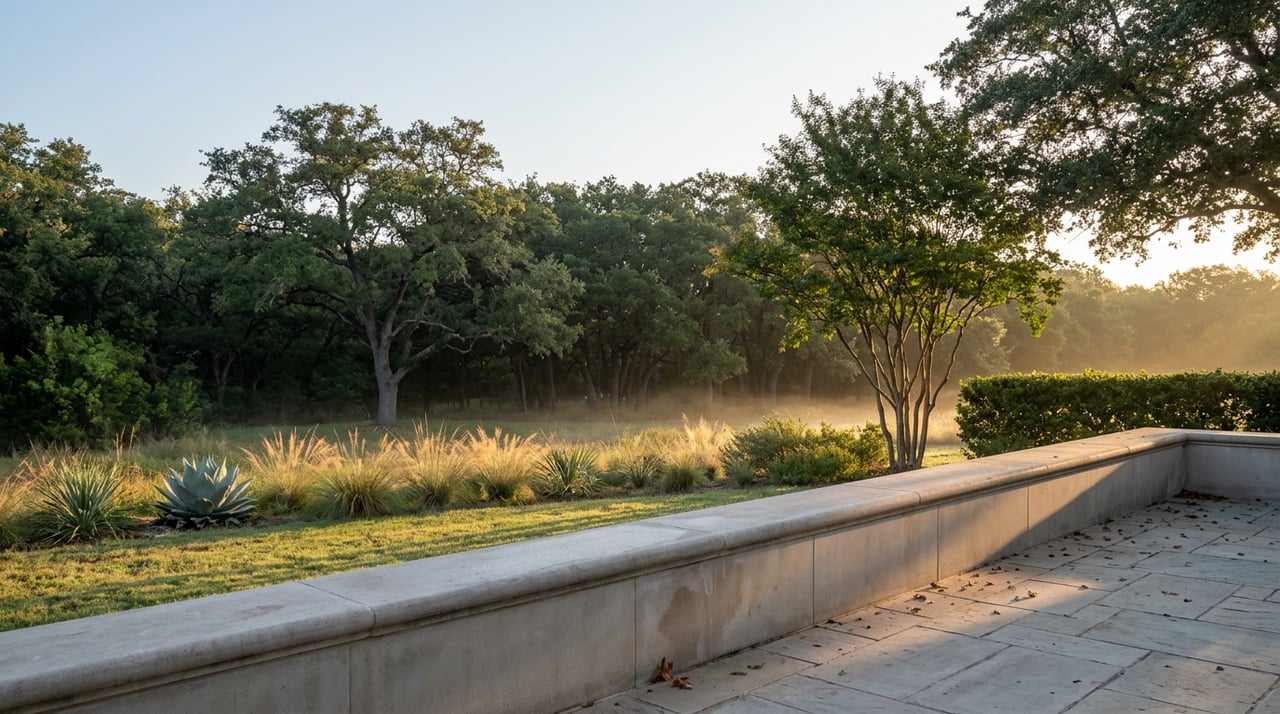
Wild Basin reads, from the road, like a city park with better views. It sits at 805 North Capital of Texas Highway, backs onto Bee Creek, and offers 2.5 miles of trail across 227 acres of Hill Country woodland. What the address does not tell you is who runs the place or why.
Wild Basin was established in 1974, the product of a local conservation push whose founders were once described, with the kind of affection reserved for people who got something done, as an environmental group of "little old ladies in tennis shoes." It is jointly owned by Travis County and St. Edward's University, and it functions today as a working research preserve inside the larger Balcones Canyonlands Preserve, the network of protected land that exists specifically to give the endangered Golden-cheeked Warbler somewhere left to nest. St. Edward's biology students use the trails for coursework. The preserve's own materials are explicit that this is not a recreational amenity first and a nature trail second. It is a research station that happens to be open to hikers.
That distinction is the whole story. A city park optimizes for the widest possible use. A research preserve optimizes for the habitat. Everything about how Wild Basin is run follows from which of those two things it is.
The Rules That Catch People
Wild Basin's visitor policy, published directly by St. Edward's University, is short and unambiguous. Pets, bikes, smoking, weapons, drones, picnics, and collecting are all prohibited on the trails, full stop. There is no version of bringing a dog here, not even a small one, not even on a slow weekday morning.
The access rules layer on top of that. Weekdays, entry is free and no reservation is needed. Weekends and federal holidays are a different system entirely: a hiking pass is required, good for up to three hours, with a nominal fee attached, five dollars for adults, three dollars for visitors six to seventeen, free for children five and under. Parking is limited, and once the lot fills, the gate closes regardless of whether you have a reservation. Under this year's summer schedule, gates opened at 7 a.m. and hikers had to be out by 8:30 p.m., though hours shift seasonally, so it is worth a quick check before you plan around them.
None of this is a bureaucratic accident. Travis County adopted the fee and reservation system specifically because fifty years of unrestricted access had started to show on the ground, in the form of cut-through trails, plant damage, and creek-side wear that the preserve's small staff couldn't keep pace with. The rules exist to protect the exact thing that makes the hike worth taking.
So Where Is Everybody Actually Walking Their Dogs
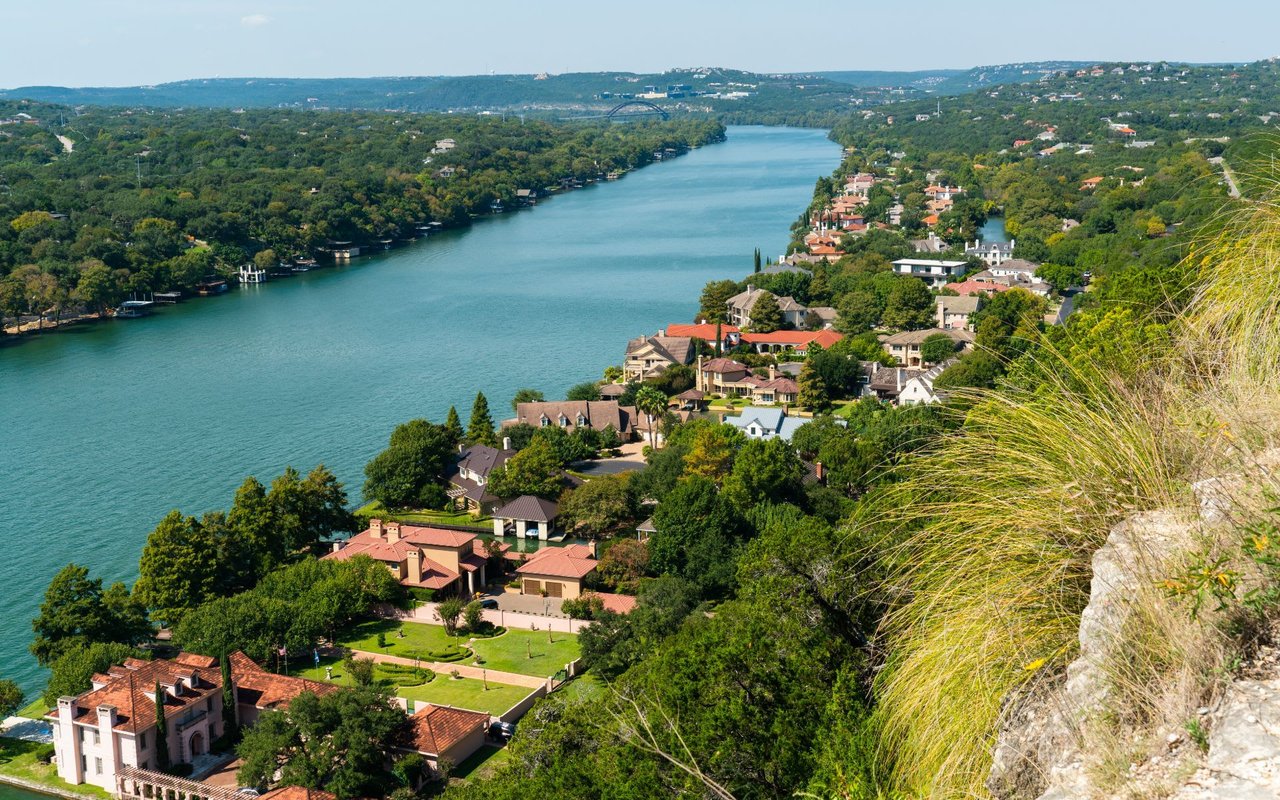
If Wild Basin isn't the neighborhood's dog trail, something else has to be, and the honest answer is that it's a drive, not a walk from the driveway. The two places West Lake Hills residents with dogs actually end up are both north along the lake, off FM 2222, a deliberate trip rather than a spontaneous one.
Emma Long Metropolitan Park is the bigger and better known of the two. Its Turkey Creek Trail sits just outside the park's main gated section, which means you can walk it without paying the park's entry fee at all, a detail that trips up a lot of first-timers who assume the whole property requires a ticket. Step past that trailhead and into the gated park itself, though, and the rules tighten in a way that mirrors Wild Basin's own logic, just calibrated differently. From March through September, a pre-purchased day pass is required for entry Friday through Sunday and on holidays, a window that includes this weekend and runs through the end of the month. Entry outside that window, or on weekdays year round, does not require the same advance ticket. Worth knowing if you're planning a fall visit: the city has scheduled a water utility shutdown at Emma Long for October 2026 for planned maintenance, which means showers, sinks, and hose bibs will be offline for a stretch, though portable facilities will remain on site.
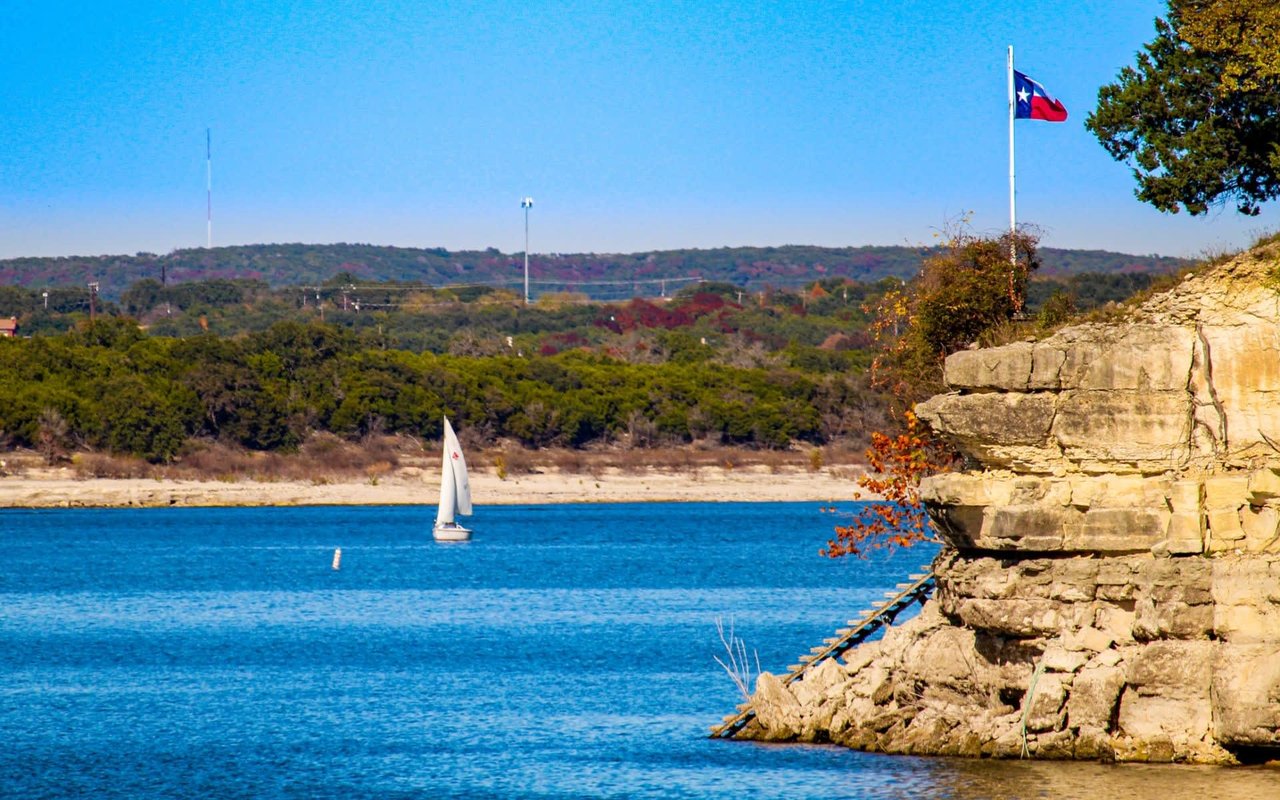
Commons Ford Ranch Metropolitan Park, a few minutes further along the same stretch of river, is the quieter option. It's smaller, at 215 acres, with a Waterfall Trail just over a mile long that follows the Colorado River toward Lake Austin. There's no entry fee. The park is consistently described by visitors as dog friendly, and while the posted rule calls for leashes, the actual culture on the ground leans looser than that, with dogs frequently off leash near the water. It reads less like an amenity and more like a spot locals found on their own and kept coming back to.
Between the two, the choice is less about distance, since they're minutes apart, and more about what kind of Saturday you're after. Emma Long has the structure: a boat ramp, camp sites, a swim area, and now a seasonal pass system that rewards planning ahead. Commons Ford has none of that scaffolding, just a river, a trail, and fewer people telling you when you're allowed to show up.
What This Actually Means for a Saturday
The neighborhood's outdoor routine, once you sort it by what's actually available, splits cleanly into two trips rather than one. If the plan is the iconic Hill Country hike, the waterfall at Bee Creek, the ridgeline views, the sense of being somewhere genuinely wild two minutes from Loop 360, that's a Wild Basin morning, and it's a solo or human-only outing that on weekends means booking ahead and paying a few dollars at the gate. If the plan is the dog, that's a different drive entirely, north to the lake, to Turkey Creek or the Waterfall Trail at Commons Ford, with the day-pass calendar at Emma Long worth checking first if a Saturday or Sunday visit is on the agenda before October arrives.
Neither trip is a downgrade from the other. They're just not the same trip, and treating Wild Basin as the default answer to "where do I walk the dog" is the one assumption in West Lake Hills that quietly doesn't hold up once you've actually tried it.
For everything else about calling this neighborhood home, from the hills above Bee Creek to the shoreline along Lake Austin, the Kathryn Scarborough Group has spent decades learning the parts of West Lake Hills and Eanes ISD that don't show up on a map. If you're weighing a move here, or already here and curious what else the neighborhood has quietly gotten right or wrong, reach out. Contact Us.